 Save to Pinterest
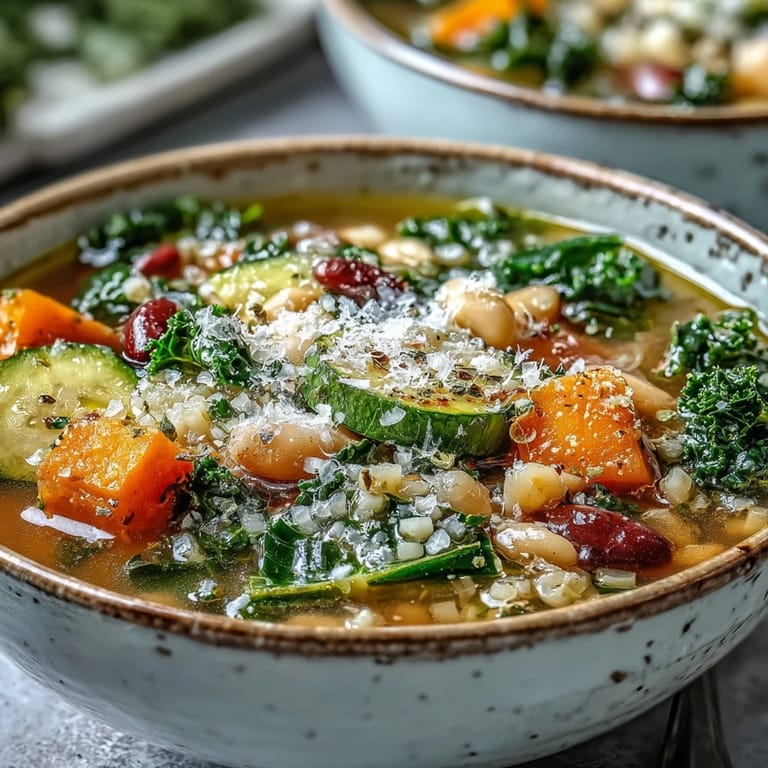
 The steam from a pot of minestrone has this way of filling the whole kitchen with warmth you can almost wrap around yourself. I made this on a gray Sunday afternoon when the windows were fogged and I had nowhere to be, just the quiet hum of the stove and a pile of vegetables waiting to be chopped. It wasn't fancy, but by the time the soup was done, the whole place smelled like an Italian grandmother had moved in. I ate two bowls standing at the counter, which is always the sign of something good.
I brought a big pot of this to a friend's house once during a snowstorm, and we sat around her kitchen table with mismatched bowls and too much bread. The soup was almost gone before anyone said much of anything, just the sound of spoons scraping and someone asking for seconds. That night it wasn't just soup, it was the thing that made being stuck indoors feel like exactly where we wanted to be.
Ingredients
- Olive oil: A good glug of this starts everything off right, coating the vegetables so they soften instead of stick.
- Yellow onion: The foundation of nearly every soup I make, it sweetens as it cooks and fills in all the gaps.
- Carrots and celery: These two are the backbone, adding a subtle sweetness and earthy depth that you don't notice until it's missing.
- Garlic: Three cloves might sound like a lot, but once they hit the heat and start to smell, you'll understand.
- Butternut squash: This is what makes the soup feel like winter, soft and slightly sweet, melting into the broth.
- Zucchini: It doesn't steal the show, but it adds a gentle texture and soaks up all the flavors around it.
- Diced tomatoes: Canned is fine here, the acidity brightens everything and ties the broth together.
- Kale: I like how it holds up in the soup without turning to mush, and it makes the whole bowl feel a little more virtuous.
- Cannellini beans: Creamy and mild, they make the soup hearty enough to be a meal on its own.
- Small pasta: Ditalini or elbow macaroni work perfectly, soaking up broth and adding that comforting chew.
- Vegetable broth: The better the broth, the better the soup, so use one you'd actually want to sip.
- Bay leaf, oregano, thyme, rosemary: These herbs build layers of flavor that make the soup taste like it simmered all day, even when it didn't.
- Salt and pepper: Always taste before serving, this is where you make it yours.
- Parmesan and parsley: Optional, but a little grated cheese and fresh green on top makes it feel special.
Tired of Takeout? 🥡
Get 10 meals you can make faster than delivery arrives. Seriously.
One email. No spam. Unsubscribe anytime.
Instructions
- Start with the base:
- Heat the olive oil in a large pot over medium heat, then add the onion, carrots, and celery. Let them cook for about 5 minutes, stirring now and then, until they soften and the onion turns translucent.
- Add the garlic:
- Stir in the minced garlic and cook for just a minute, until the smell hits you and you know it's ready. Don't let it brown or it'll turn bitter.
- Build the body:
- Toss in the butternut squash and zucchini, stirring them around for another 5 minutes. They'll start to pick up color and release a little sweetness.
- Bring in the broth:
- Pour in the diced tomatoes, vegetable broth, bay leaf, oregano, thyme, and rosemary. Bring everything to a boil, then lower the heat to a gentle simmer.
- Let it cook down:
- Cover the pot and let it simmer for 15 minutes, just until the squash is tender but not falling apart. This is where the flavors start to marry.
- Finish with greens and pasta:
- Add the beans, pasta, and kale, then simmer uncovered for 10 to 12 minutes. The pasta will cook through and the kale will wilt into the broth.
- Season and serve:
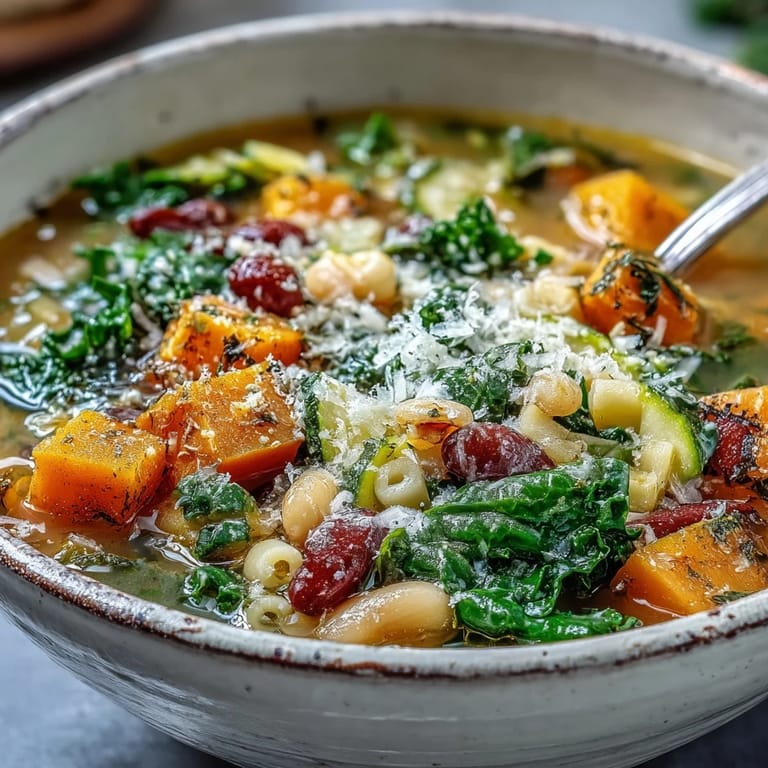
- Pull out the bay leaf, then taste and adjust with salt and pepper. Ladle into bowls and top with Parmesan and parsley if you're using them.
 Save to Pinterest
 There was an evening I made this after a long week, and I didn't have the energy to do anything but chop and stir. By the time I sat down with a bowl, I realized the soup had done all the work for me. It wasn't just food, it was the thing that made me feel like I could breathe again.
Making It Your Own
This soup is forgiving in the best way. If you don't have butternut squash, use sweet potato or even extra zucchini. Spinach works just as well as kale, and if you're out of cannellini beans, white beans or chickpeas will do the job. I've made it a dozen different ways depending on what's in the fridge, and it's never let me down.
Storage and Leftovers
The soup keeps in the fridge for up to four days, and honestly, it tastes even better the second day once everything has had time to settle. If you're planning to freeze it, leave out the pasta and add it fresh when you reheat, otherwise it gets too soft. I like to freeze it in single portions so I can pull one out on a night when cooking feels impossible.
Serving Suggestions
A thick slice of crusty bread is all you really need, but sometimes I'll toast it with a little olive oil and garlic for good measure. If you want to stretch the meal, a simple green salad with lemon and olive oil keeps things light. And if you're feeding a crowd, set out bowls of Parmesan, red pepper flakes, and fresh herbs so everyone can make it their own.
- Serve with garlic bread or focaccia for dipping.
- Top with a drizzle of good olive oil for extra richness.
- Pair with a crisp white wine or sparkling water with lemon.
 Save to Pinterest
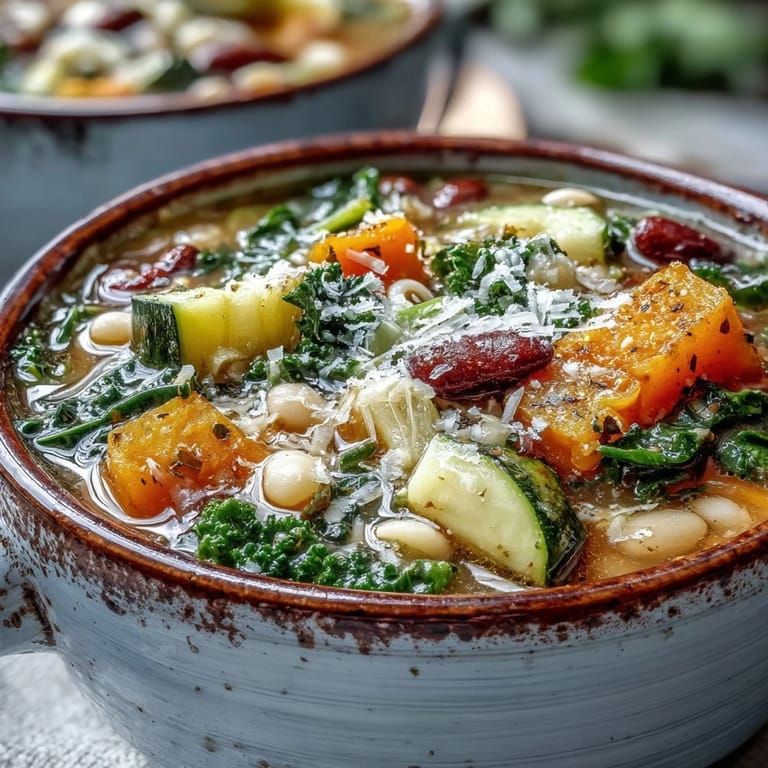
 This soup has become my go to when I need something that feels like a hug in a bowl. I hope it does the same for you.
Questions & Answers
- → Can I make this ahead of time?
Absolutely. The flavors actually deepen and improve after a day in the refrigerator. Store it in an airtight container for up to 4 days.
- → How do I prevent the pasta from getting mushy?
Cook the pasta separately and add it to individual bowls when serving, or slightly undercook it in the soup since it will continue absorbing liquid.
- → Can I freeze this?
Yes, freeze without the pasta for best results. Thaw overnight in the refrigerator, reheat gently, and add freshly cooked pasta when serving.
- → What vegetables can I substitute?
Spinach or chard work well instead of kale. Try sweet potatoes, acorn squash, or diced pumpkin in place of butternut squash based on what's available.
- → How can I add more protein?
Incorporate diced sausage, ground turkey, or shredded chicken during the vegetable sauté. Extra beans or lentils also boost protein while keeping it vegetarian.
- → What's the best way to store leftovers?
Cool completely before transferring to airtight containers. The pasta will continue softening, so add a splash of broth when reheating to restore consistency.