 Save to Pinterest
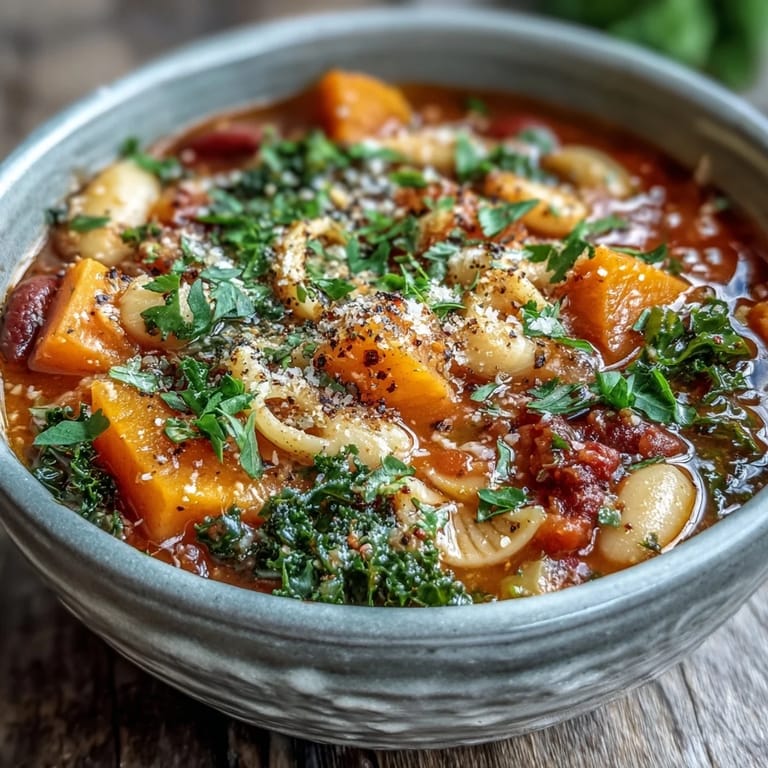
 The smell of sautéed garlic and celery hit me the moment I walked into my neighbor's kitchen one February afternoon. She was stirring a pot of minestrone, steam rising in soft clouds, and I remember thinking how different it looked from the summer version I'd grown up with. This one was deeper, warmer, filled with chunks of orange squash and dark leafy greens. She ladled me a bowl without asking, and I understood immediately why winter minestrone deserves its own place at the table.
I made this for a group of friends during a snowstorm last year when nobody could leave. We kept adding to the pot throughout the evening, tossing in extra pasta, more kale, another splash of broth. It became less about following a recipe and more about keeping everyone fed and warm. Someone brought over a loaf of sourdough, and we tore into it between bowls, wiping up every last bit of tomato broth. That night taught me that minestrone is really just an excuse to gather around something nourishing.
Ingredients
- Olive oil: Use enough to coat the bottom of the pot so the vegetables can soften without sticking, and it adds a subtle richness that butter can't quite match.
- Yellow onion: Dice it small so it practically dissolves into the broth, sweetening everything as it cooks down.
- Carrots: Peel them first or the skins will float around in the soup, and cut them into even pieces so they cook at the same rate as the celery.
- Celery: Don't skip this, it gives the soup that unmistakable Italian backbone and a slight bitterness that balances the sweet squash.
- Garlic: Mince it fine and add it after the other vegetables have softened, or it'll burn and turn bitter.
- Butternut squash: Peeling it is the hardest part, but once it's diced it becomes the soul of the soup, breaking down just enough to thicken the broth.
- Zucchini: Adds a mild freshness and holds its shape better than squash, giving you different textures in every spoonful.
- Kale: Remove the tough stems and tear the leaves into bite sized pieces so they wilt evenly without turning stringy.
- Diced tomatoes: Use the whole can, juices included, because that liquid is already seasoned and adds acidity that brightens everything.
- Cannellini beans: Rinse them well to wash off the starchy liquid, and they'll add creaminess without making the soup heavy.
- Small pasta: Ditalini or elbows work best because they fit on a spoon easily and cook quickly in the broth.
- Vegetable broth: Homemade is lovely, but a good quality store bought broth works just as well if you season it properly.
- Water: Thins the broth just enough so it doesn't taste too concentrated or salty.
- Dried oregano, thyme, and rosemary: These three herbs together create that unmistakable Italian warmth, but crush them between your fingers before adding to release their oils.
- Crushed red pepper flakes: Optional, but a pinch adds a gentle heat that sneaks up on you in the best way.
- Salt and black pepper: Taste as you go, especially after adding the pasta, because it absorbs a lot of seasoning.
- Fresh parsley: Stir it in at the end for a pop of color and a bright, grassy note that cuts through the richness.
- Parmesan cheese: Grate it fresh if you can, and let everyone add their own at the table so it melts into their bowl.
Tired of Takeout? 🥡
Get 10 meals you can make faster than delivery arrives. Seriously.
One email. No spam. Unsubscribe anytime.
Instructions
- Start with the base:
- Heat the olive oil in a large pot over medium heat until it shimmers, then add the onion, carrots, and celery. Stir them occasionally for 5 to 6 minutes until the onion turns translucent and the kitchen smells sweet and savory.
- Add the garlic:
- Toss in the minced garlic and stir constantly for about a minute. You'll know it's ready when the smell shifts from raw to fragrant and almost nutty.
- Cook the squash and zucchini:
- Add the diced butternut squash and zucchini to the pot, stirring them into the other vegetables. Let them cook for 4 to 5 minutes, giving them a head start so they soften properly later.
- Build the broth:
- Pour in the diced tomatoes with their juices, then add the vegetable broth and water. Bring everything to a boil, watching for the first big bubbles to break the surface.
- Season and simmer:
- Stir in the oregano, thyme, rosemary, and red pepper flakes if using. Reduce the heat to a gentle simmer and let it cook uncovered for 15 minutes so the squash starts to break down and the flavors begin to marry.
- Add beans and pasta:
- Stir in the cannellini beans and pasta, then simmer for another 8 to 10 minutes. Test the pasta a minute early to make sure it doesn't overcook and turn mushy.
- Wilt the kale:
- Add the chopped kale and cook for 2 to 3 minutes, stirring gently until the leaves turn bright green and tender. Taste the broth and adjust the salt and pepper as needed.
- Finish and serve:
- Remove the pot from the heat and stir in the fresh parsley. Ladle the soup into bowls and pass around the Parmesan for anyone who wants it.
 Save to Pinterest
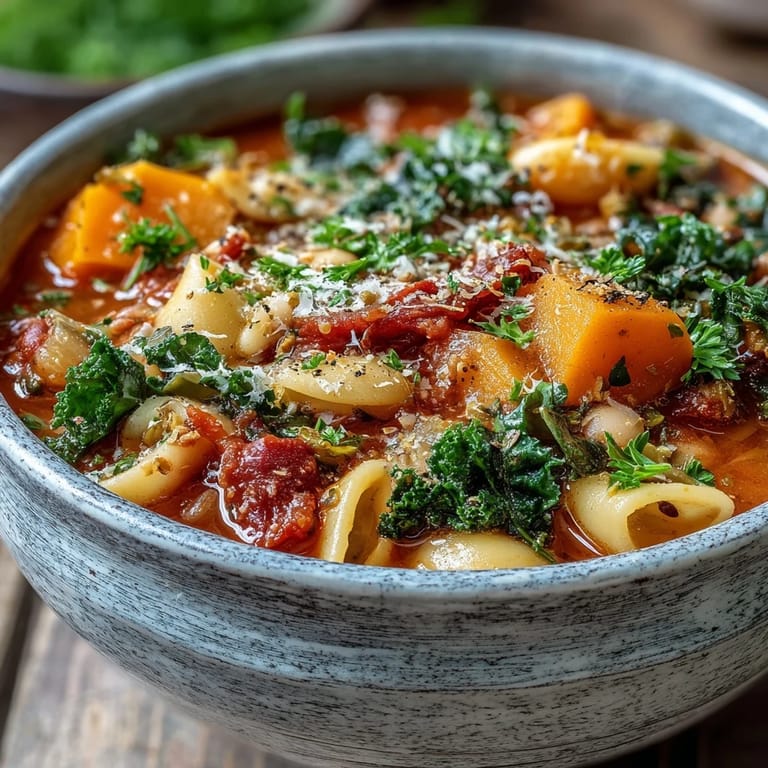
 There's a moment when you're ladling this soup into bowls and you see all the colors, the orange squash, the green kale, the white beans, and it looks almost too pretty to eat. But then someone takes the first bite and the room goes quiet for a second, and you realize it's not just soup. It's comfort in a bowl, the kind that makes cold nights feel a little less harsh and a little more like home.
How to Store and Reheat
Let the soup cool completely before transferring it to airtight containers, and it'll keep in the fridge for up to four days. When you reheat it on the stove, add a little extra broth or water because the pasta will have absorbed a lot of the liquid. I've also frozen portions in quart sized bags, laying them flat in the freezer so they stack neatly, and they last for up to three months. Just thaw overnight in the fridge and warm gently, stirring occasionally so nothing sticks to the bottom.
Ingredient Swaps and Variations
If you can't find butternut squash, sweet potato works beautifully and cooks in about the same amount of time. Swap the kale for spinach or Swiss chard if that's what you have, though spinach wilts faster so add it in the last minute. I've used kidney beans and chickpeas in place of cannellini, and both held up well, though chickpeas add a slightly nuttier flavor. For a heartier version, stir in cooked Italian sausage or shredded chicken, but then it's no longer vegetarian so label it clearly if you're serving a crowd.
Serving Suggestions
This soup is filling enough to stand on its own, but it really shines with a thick slice of crusty bread for dipping. I like to set out a small bowl of good olive oil and another of grated Parmesan so everyone can customize their bowl. A crisp green salad with lemon vinaigrette cuts through the richness, and if you're feeling fancy, a glass of Pinot Grigio or a light Chianti pairs perfectly.
- Serve with garlic bread or focaccia for soaking up every last drop of broth.
- Top with a drizzle of pesto or a spoonful of ricotta for extra creaminess.
- Pack leftovers in a thermos for a warm lunch that travels well.
 Save to Pinterest
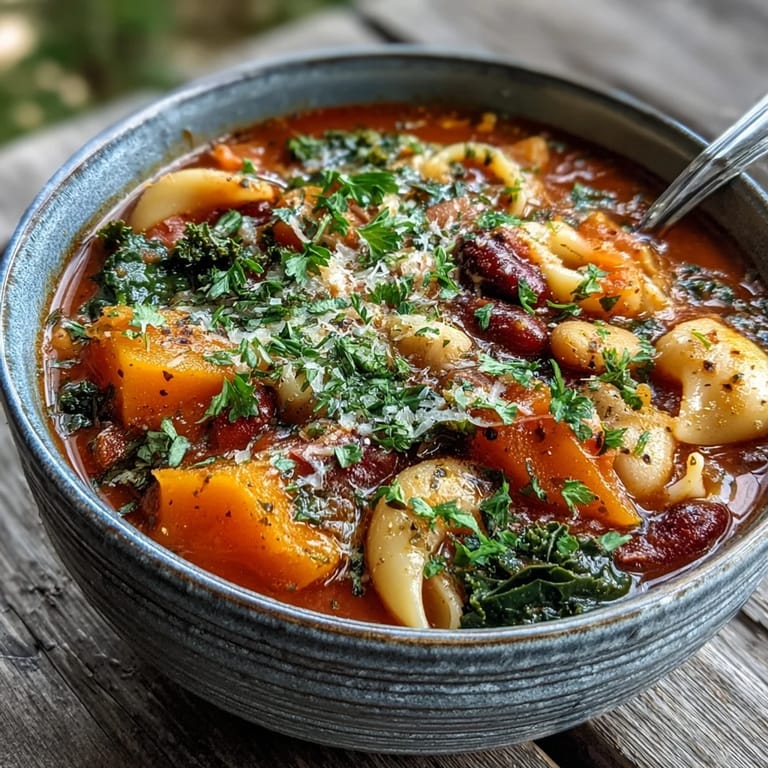
 This is the kind of soup that reminds you why cooking matters, not because it's complicated, but because it's simple and real and feeds people in more ways than one. Make a big pot, share it generously, and keep a bowl for yourself.
Questions & Answers
- → What makes this minestrone perfect for winter?
Butternut squash brings natural sweetness and hearty texture, while kale adds robust nutrition. The warming tomato broth with aromatic herbs like rosemary and thyme creates comfort in every spoonful.
- → Can I make this soup in advance?
Absolutely. This minestrone actually improves overnight as flavors meld. Store in the refrigerator for up to 4 days, adding a splash of broth when reheating since pasta absorbs liquid.
- → What pasta works best in this soup?
Small shapes like ditalini or elbow macaroni hold up well during simmering. The pasta cooks directly in the broth, absorbing flavor while maintaining texture.
- → How can I make this vegan?
Simply omit the Parmesan cheese or use a dairy-free alternative. The rest of the soup—including vegetables, beans, pasta, and herbs—is naturally plant-based.
- → What should I serve with this minestrone?
Crusty bread for dipping is essential. A crisp white wine like Pinot Grigio complements the tomato broth beautifully. A simple green salad with vinaigrette rounds out the meal.
- → Can I freeze this soup?
Yes, though pasta may soften slightly. For best results, freeze without pasta and add fresh pasta when reheating. Keeps well frozen for up to 3 months.