 Save to Pinterest
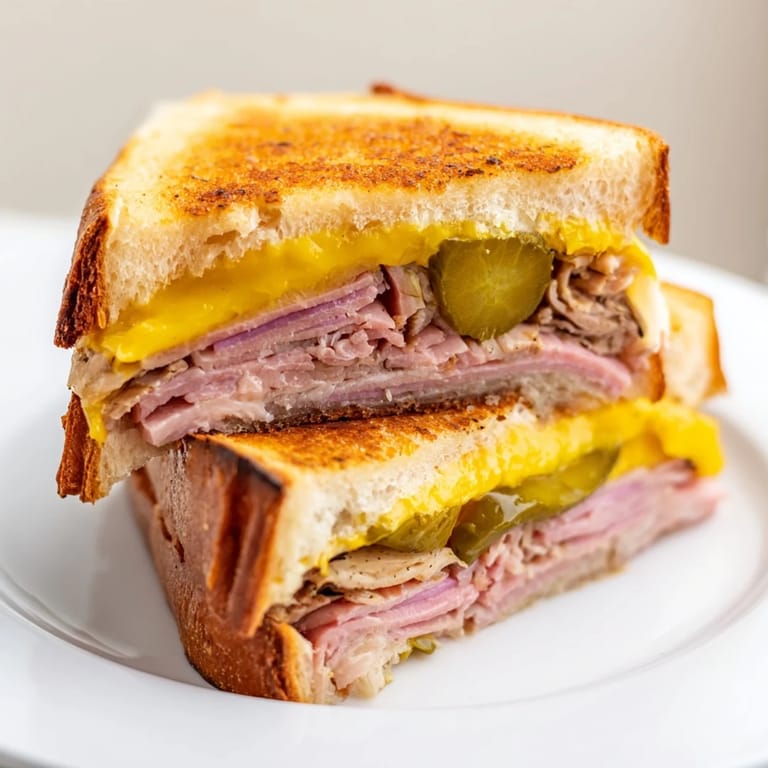
 My first Cuban sandwich arrived in my hands on a steaming Miami afternoon, pressed so tight the butter was already seeping through the paper wrapping. I bit into it without hesitation and suddenly understood why this wasn't just lunch—it was nostalgia, history, and pure comfort all melted together. The way the cheese pulled between the layers of pork and ham, how the mustard sang against the pickles, how that crisp bread gave way to something impossibly tender inside. I've made them a hundred times since, but that first moment of discovery never really faded.
I remember bringing these to my neighbor's small gathering, nervous about how they'd land with people who'd grown up eating them the real way. Within minutes, someone was asking for the recipe, then another person, then suddenly I was taking orders like I'd accidentally started a business. That's when I realized these sandwiches have a way of making people feel like they're tasting something genuine, something that matters.
Ingredients
- Roast pork and deli ham (8 oz each): These are the heart of everything—the pork brings richness and depth while the ham adds that familiar, salty anchor. Ask your deli to slice them thin; that's where the magic starts, not at home with scissors.
- Swiss cheese (8 oz, thinly sliced): Swiss melts without becoming greasy, and those little holes actually help the heat spread evenly through your sandwich.
- Cuban bread (1 loaf, cut into 4 portions): This is crucial—that specific crumb structure and thin crust are what make it crisp outside and yielding inside. If you can't find Cuban bread, soft French bread works, though you'll lose a tiny bit of that authentic snap.
- Yellow mustard (1/4 cup): It's tangy enough to cut through the richness but not so strong it overpowers. This is your flavor backbone.
- Dill pickle slices (16 total): Four per sandwich is just right—any more and they steal the show, any less and you lose that crucial vinegary brightness.
- Unsalted butter (2 tbsp, softened): The softened part matters because you're spreading it, not melting it, and you want an even golden crust.
Tired of Takeout? 🥡
Get 10 meals you can make faster than delivery arrives. Seriously.
One email. No spam. Unsubscribe anytime.
Instructions
- Prep your bread:
- Slice each portion horizontally with a serrated knife in one confident motion—don't saw back and forth or you'll tear the crumb. Spread mustard on both cut faces generously but not so thick it pools.
- Build your layers:
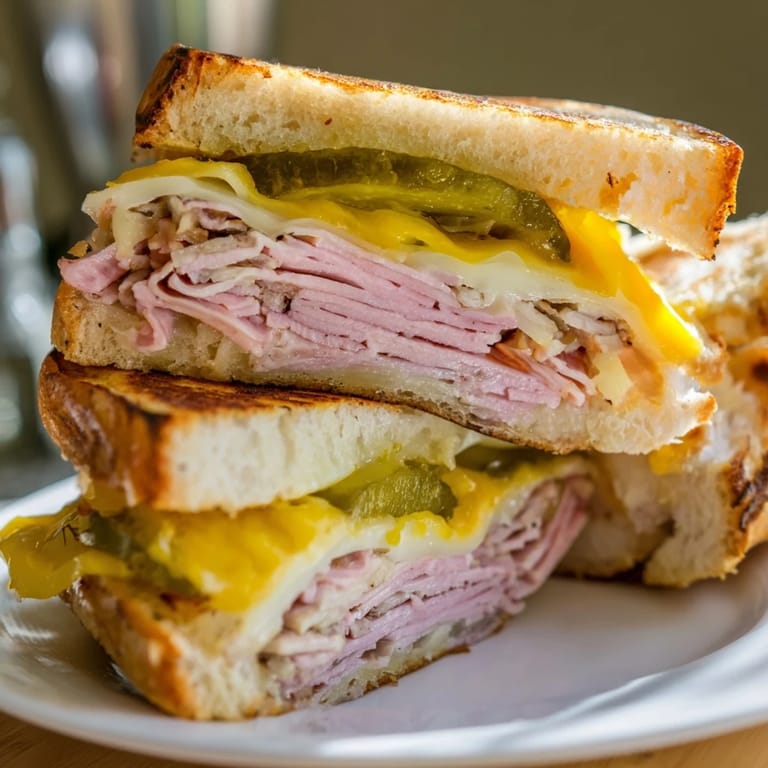
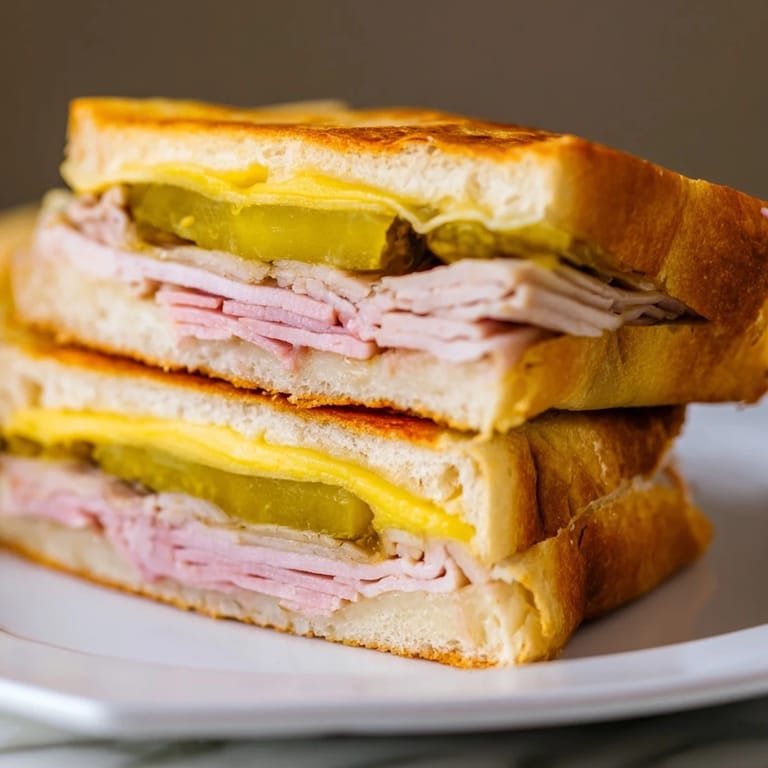
- Start with pork on the bottom, then ham, then cheese, then pickles. Think of it like you're creating a map where every bite hits all four flavors at once. The order matters because the cheese acts as a seal.
- Close and butter:
- Place the top bread half down gently and press just enough so everything holds together. Spread softened butter on the exterior of both sides—this is what gives you that golden, crispy crust.
- The press:
- Heat your skillet or panini press to medium heat and place the sandwich down. If you're using a skillet, grab something heavy—a cast iron pan, a spatula pressed with your hand, even a brick wrapped in foil. Press down and listen for that gentle sizzle; that's your signal everything's making contact with the heat.
- Get the timing right:
- Four to five minutes per side in a skillet, letting the bread toast from light gold to deeper amber. You want to hear a soft crunch when you bite, not silence. The cheese should be fully melted and pulling at the sides when you peek.
- Finish and serve:
- Pull it off the heat and let it cool just 30 seconds—I know it's hard to wait. Slice diagonally because it looks right and somehow tastes better this way, then eat it while the steam is still rising.
 Save to Pinterest
 There's a moment right after you bite into one of these when you taste every single layer working together—that's the moment you understand why this sandwich has lasted generations. It's not complicated food, but it's food that matters.
Choosing Your Bread Wisely
The bread is genuinely half the equation here, and I learned this the hard way by once using day-old French bread that fell apart in my hands. Cuban bread has this specific crumb structure and thin crust that toasts beautifully without becoming tough or shattering. If you're in a location without access to Cuban bread, a fresh soft Italian loaf or French bread works in a pinch, but freshness matters enormously—buy it the same day you're making the sandwich. Day-old bread will disappoint you, so just don't.
The Science of Melting and Pressing
The magic really happens through pressure and steady heat rather than high temperature. When you press the sandwich, you're doing two things: forcing the cheese into direct contact with the heat source, and pushing all the ingredients together so they share flavors instead of staying separate. I used to think more heat meant faster melting until one sandwich came out with burnt edges and cold cheese in the middle. Now I use medium heat and patience, and every sandwich comes out perfect. The press redistributes heat across the entire sandwich rather than scorching one spot.
Making It Your Own
Some people add mayonnaise under the mustard for richness, and that's actually wonderful if you want something creamier. Others layer in a thin spread of chimichurri for brightness, or add a fried egg if they're feeling extravagant. The foundation is solid enough that it welcomes small variations without losing its identity. The beauty of this sandwich is that it tastes authentic whether you keep it traditional or add your own touch.
- A thin schmear of mayo under the mustard adds subtle creaminess without overwhelming the flavors.
- Toast your pickles briefly in the skillet before assembly for a warm, slightly softened version.
- Let the sandwich rest for exactly 30 seconds after pressing so the cheese sets slightly and doesn't escape when you bite.
 Save to Pinterest
 This sandwich tastes like more than just lunch—it tastes like belonging to something bigger than yourself. Make it, share it, watch someone's face when they bite into it for the first time.
Questions & Answers
- → What bread works best for this sandwich?
Traditional Cuban bread is ideal for its crisp exterior and soft interior, but soft French or Italian bread can be great alternatives.
- → Can I substitute the meats?
Yes, roast pork and deli ham create the classic flavor, but you can try smoked turkey or other cured meats for variation.
- → How do I achieve the melted cheese effect?
Pressing the sandwich and grilling it with butter over medium heat allows the Swiss cheese to melt smoothly without burning the bread.
- → What condiments enhance the flavor?
Yellow mustard adds tang and moisture, while dill pickles provide a crunchy, briny contrast that balances the rich meats and cheese.
- → Can this be made ahead and reheated?
Assembling ahead is fine, but grill fresh to keep bread crisp and cheese melted. Reheating in a skillet or sandwich press works best.