 Save to Pinterest
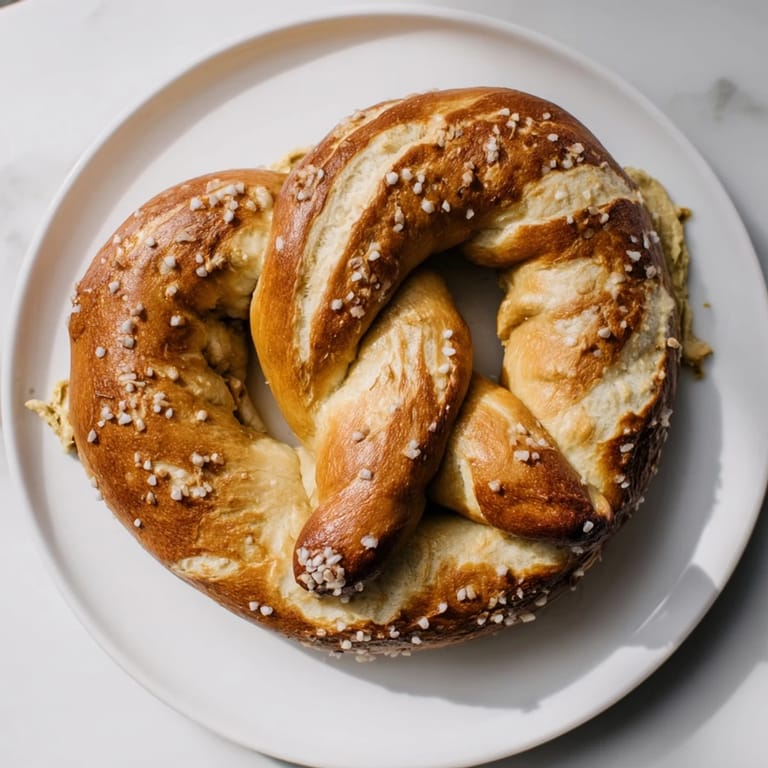
 The first time I made soft pretzels at home, I was convinced they'd be a disaster. I'd watched a vendor twist them at a street fair and thought, how hard could it be? Turns out, the magic wasn't just in the twist—it was in that unexpected step of dunking them in a baking soda bath that transforms the crust into something with a deep mahogany shine and an almost chewy exterior. When they came out of the oven, the whole kitchen smelled like a German bakery, and I understood why people line up for these warm, salty, utterly craveable things.
I made a batch for my sister's game night, and she took one bite and immediately forgot about the snack bowl of chips sitting right there. That's when I realized soft pretzels aren't just bread—they're the kind of thing that makes people feel cared for, that says you spent time in the kitchen thinking about what they'd love.
Ingredients
- Bread flour: You really do need the extra gluten here; all-purpose will give you a softer crumb, which some love, but bread flour creates that tender chewiness that makes these pretzels special.
- Active dry yeast: Warm water matters—too hot and you'll kill it, too cold and nothing happens; 110°F is the sweet spot.
- Kosher salt (for dough): This dissolves cleanly into the dough without any grainy texture that table salt can leave behind.
- Baking soda: This is the secret player that gives the pretzel its burnished crust and slightly chewy exterior; don't skip it or use regular salt water instead.
- Coarse pretzel salt: This stays on the surface and gives you those satisfying salt crystals with every bite; it's worth hunting down at a baking supply store or online.
- Egg wash: Just one yolk mixed with water gives you that gorgeous golden shine without making the crust thick or glossy in the wrong way.
Tired of Takeout? 🥡
Get 10 meals you can make faster than delivery arrives. Seriously.
One email. No spam. Unsubscribe anytime.
Instructions
- Bloom your yeast:
- Combine warm water, sugar, and yeast in a bowl and let it sit for about 5 minutes. You'll see it foam up and smell faintly yeasty—that's how you know it's alive and ready to work.
- Build the dough:
- Stir in melted butter and salt, then add flour one cup at a time, stirring until a shaggy dough comes together. This moment feels like organized chaos, but you're just making sure everything is evenly mixed.
- Knead until smooth:
- Turn the dough onto a floured surface and knead for 5 to 7 minutes. At first it'll be rough and sticky, but gradually it becomes smooth and elastic—you'll feel when it's ready because your hands will barely stick to it anymore.
- Let it rise:
- Place the dough in a lightly oiled bowl, cover it with a damp towel, and let it sit in a warm spot for about an hour. It should roughly double in size; if your kitchen is chilly, try the oven with just the light on.
- Shape the pretzels:
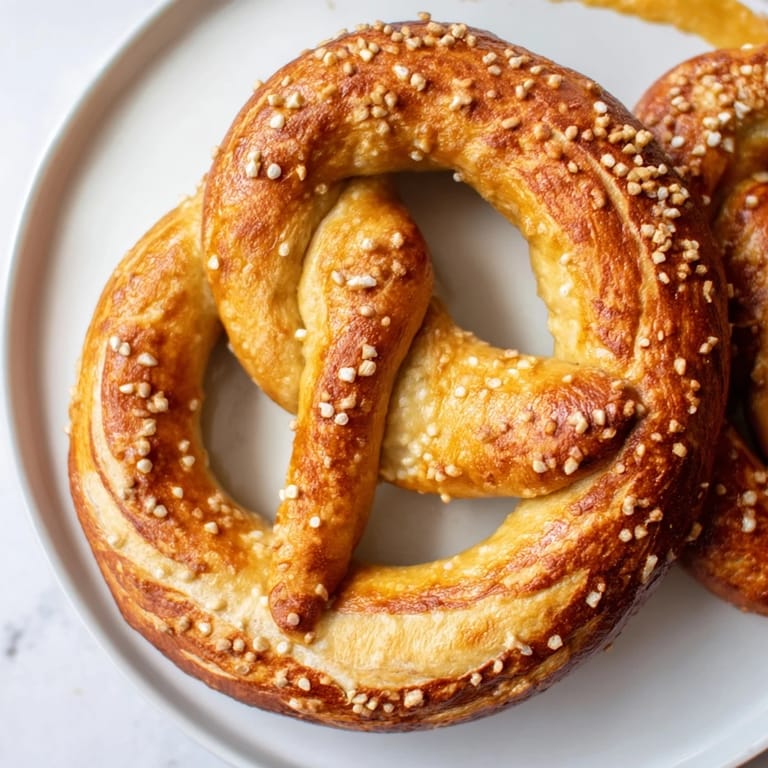
- Punch down the risen dough and divide it into 8 pieces. Roll each piece into a long rope—about 20 to 22 inches—then form it into that classic pretzel shape: make a U, twist the ends together twice, and fold the twist down and over to create the loop.
- Prepare the bath:
- In a large pot, bring 10 cups of water and ⅔ cup of baking soda to a boil. This will fizz and bubble quite a bit, which is exactly what should happen.
- Dunk and transfer:
- Working one at a time, carefully slide each pretzel into the boiling bath and count out 30 seconds. A slotted spatula makes this much easier than you'd think—just scoop it out gently and place it on a parchment-lined baking sheet.
- Finish with shine and salt:
- Brush each pretzel with egg wash and immediately sprinkle coarse salt on top while the surface is still wet. The salt clings to the damp surface and stays put while baking.
- Bake until golden:
- Slide the baking sheets into a 450°F oven and bake for 12 to 15 minutes, until the pretzels turn deep golden brown. They'll continue to firm up slightly as they cool.
- Cool and serve:
- Let them cool on a wire rack for a few minutes—they're best served warm, when that chewy crust is still flexible. Serve with mustard and watch them disappear.
 Save to Pinterest
 There's something almost ceremonial about pulling warm pretzels from the oven, the kitchen filled with that impossible aroma, knowing you made something that tastes like a street vendor's craft. That's when homemade food feels less like a task and more like a small triumph.
The Magic of the Baking Soda Bath
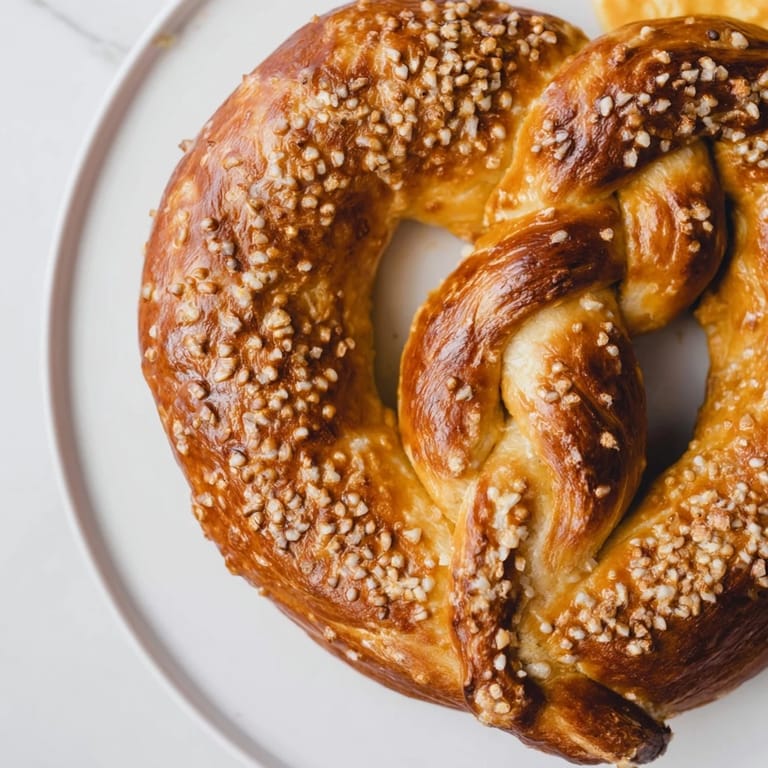
I spent years wondering what made bakery pretzels so much better than homemade attempts, and it all comes down to that boiling baking soda bath. The high pH chemically changes the surface of the dough, creating that deep brown color and that slightly chewy, almost caramelized crust you can't achieve in any other way. It's one of those cooking moments where a small step creates a completely different result.
Shape and Confidence
The pretzel shape looks fancy but it's actually quite forgiving. Your first one might not be picture-perfect, but by the third or fourth, your hands remember the motion and they start looking properly twisted. I've found that the shape doesn't need to be perfect to taste perfect—what matters is that you're consistent enough that they cook evenly.
Variations and Why They Work
Once you master the basic pretzel, you can play around. I've made cinnamon sugar versions for dessert, topped them with everything bagel seasoning, and even tried a sharp cheddar sprinkle before baking. Each variation works because the foundation—that tender, chewy crumb and the baked soda crust—stays the same.
- Skip the salt and brush warm pretzels with melted butter, then dust with cinnamon sugar for a sweet-savory treat.
- Try sesame seeds, poppy seeds, or everything bagel seasoning scattered over the egg wash for a different flavor path.
- Serve alongside cheese sauce, honey mustard, or even a dark beer mustard to give people options.
 Save to Pinterest
 Soft pretzels are one of those recipes that feels impressive but rewards you every single time you make them. Once you nail the technique, you'll find yourself baking them far more often than you expected.
Questions & Answers
- → What makes pretzels soft and chewy?
The combination of yeast fermentation, warm water, and kneading creates a tender crumb. The baking soda bath gives the crust a distinct chewy texture and deep color.
- → Why is a baking soda bath used?
Dipping the pretzels in a boiling baking soda solution before baking helps develop their characteristic chewy crust and golden-brown color.
- → Can I make pretzels sweeter?
Yes, brushing baked pretzels with melted butter and sprinkling cinnamon sugar adds a delightful sweet twist.
- → What are good topping alternatives?
Sesame seeds, poppy seeds, or cheese can be added before baking to provide variety and additional flavors.
- → How should pretzels be served?
They are best enjoyed warm with yellow or spicy brown mustard, but cheese sauce or honey mustard are excellent options as well.