 Save to Pinterest
 My neighbor Sofia brought me a bowl of minestrone one rainy Tuesday, still steaming from her stove. I had just moved in, boxes everywhere, no groceries yet. That soup tasted like kindness itself. She told me her nonna's rule: whatever vegetables you have, you use. I've been making it ever since, and every pot feels like that same warm welcome.
I made this for a friend going through a rough week, and she cried over the second bowl. Not because it was sad, but because something about a warm, generous soup reminded her she wasn't alone. We sat at my tiny kitchen table, dunking bread, talking until the pot was empty. That's when I realized minestrone isn't just food, it's presence.
Ingredients
- Olive oil: Use a good quality one for sautéing; it becomes the flavor foundation and you'll taste it in every spoonful.
- Onion, carrots, celery: This holy trinity builds sweetness and depth, so don't rush the browning or you'll lose that caramelized magic.
- Garlic: Mince it fine and add it after the other vegetables soften, or it burns and turns bitter fast.
- Zucchini and green beans: Fresh vegetables give the soup body and texture; frozen works too, but cut down the cooking time a bit.
- Spinach or kale: Stir it in at the very end so it wilts without turning to mush; I've learned this the slimy way.
- Diced tomatoes: Canned tomatoes are your friend here; they're consistent, already seasoned, and break down into the broth beautifully.
- Vegetable broth: Homemade is lovely, but store bought is just fine; taste it first because some brands are saltier than others.
- Oregano, basil, thyme, bay leaf: Dried herbs bloom in the simmering broth and fill your kitchen with the smell of an Italian grandmother's kitchen.
- Small pasta: Ditalini or small shells are traditional, but I've used whatever short pasta I had and it always works.
- Cannellini and kidney beans: Creamy and hearty, they make this soup a meal; rinse them well or the liquid clouds your broth.
- Parmesan, parsley, extra virgin olive oil: These garnishes aren't optional in my book; they transform the bowl from good to unforgettable.
Tired of Takeout? 🥡
Get 10 meals you can make faster than delivery arrives. Seriously.
One email. No spam. Unsubscribe anytime.
Instructions
- Start with the soffritto:
- Heat the olive oil in a large pot over medium heat, then add the diced onion, carrots, and celery. Let them sauté for 5 to 6 minutes, stirring occasionally, until they soften and smell sweet.
- Add the next layer:
- Toss in the minced garlic, diced zucchini, and chopped green beans, stirring for 3 to 4 minutes. You'll notice the garlic perfume the whole kitchen.
- Build the broth:
- Pour in the diced tomatoes, vegetable broth, oregano, basil, thyme, bay leaf, salt, and pepper, then bring everything to a rolling boil. This is where the soup starts to become itself.
- Simmer it low:
- Reduce the heat, cover the pot, and let it simmer gently for 15 minutes. The vegetables will soften and the flavors will marry beautifully.
- Cook the pasta and beans:
- Stir in the pasta and both types of drained beans, then simmer uncovered for 10 to 12 minutes until the pasta is al dente. Don't overcook or the pasta turns mushy in the broth.
- Wilt the greens:
- Add the spinach or kale and cook for just 2 to 3 minutes until wilted, then fish out the bay leaf. Taste and adjust the salt and pepper now.
- Serve it up:
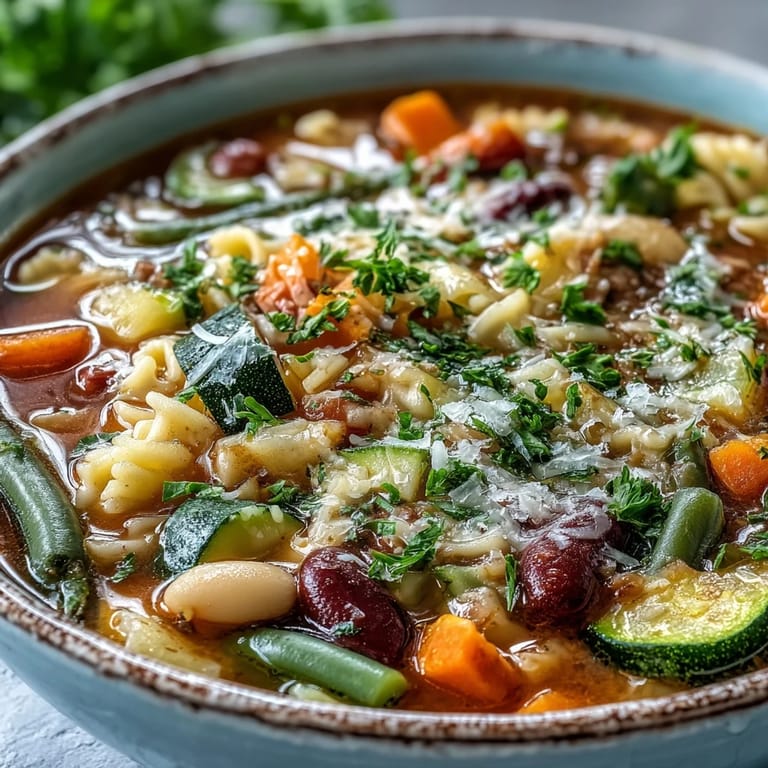
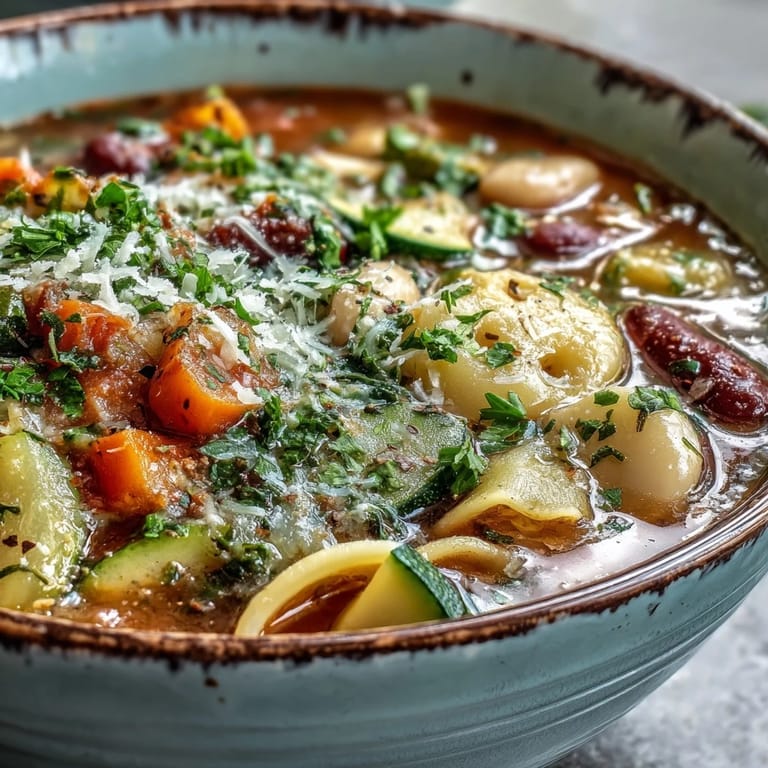
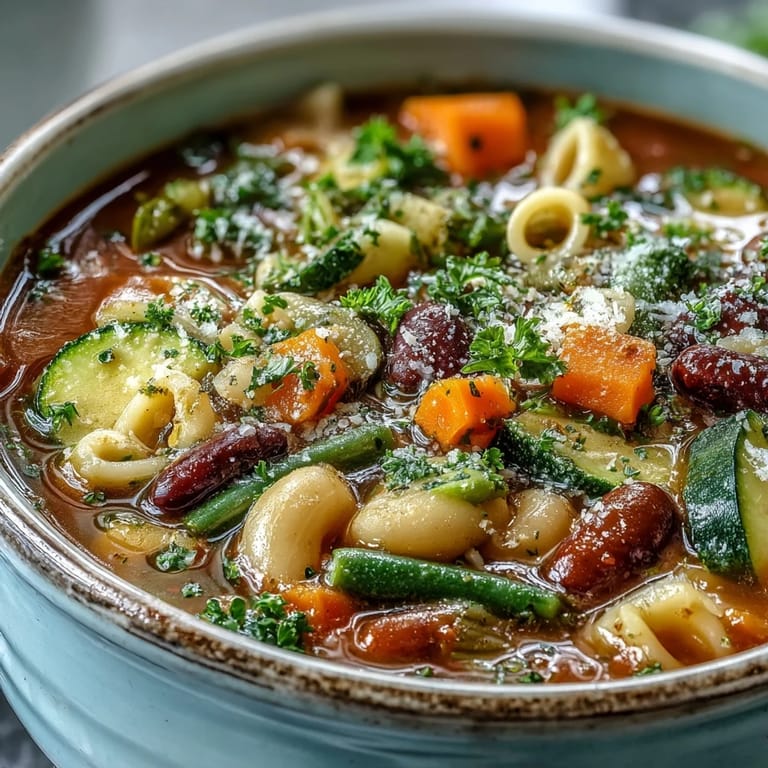
- Ladle the soup into bowls while it's still hot, then top with freshly grated Parmesan, chopped parsley, and a generous drizzle of your best olive oil.
 Save to Pinterest
 One winter evening, I doubled the batch and froze half in mason jars. Months later, on a night when I was too tired to think, I thawed one and remembered why I love cooking. It wasn't just dinner, it was a gift I'd left for myself. That's the real magic of minestrone.
Making It Your Own
The beauty of this soup is that it bends to whatever you have on hand. I've added diced potatoes, shredded cabbage, and even frozen peas when my crisper was bare. Each time it tasted different, but always right. Think of the recipe as a template, not a rulebook.
Storing and Reheating
Minestrone keeps well in the fridge for up to four days, though the pasta will drink up more broth as it sits. When reheating, add a splash of water or broth to loosen it back up. I actually prefer it on day two when everything has melded together and the flavors have deepened.
Serving Suggestions
This soup begs for a hunk of crusty Italian bread, the kind with a chewy crust and airy crumb that soaks up the broth. A simple green salad with lemon vinaigrette on the side keeps it light. If you want to make it a feast, pour a glass of Chianti and pretend you're sitting in a trattoria in Tuscany.
- Serve with toasted garlic bread rubbed with a cut clove of garlic while it's still warm.
- Pair it with a crisp white wine like Pinot Grigio if red isn't your thing.
- Leftovers make an excellent lunch; pack it in a thermos and you'll be the envy of the office.
 Save to Pinterest
 Minestrone is proof that simple ingredients, treated with care, can become something that nourishes more than just your body. Make a big pot, share it freely, and let it remind you what home tastes like.
Questions & Answers
- → What vegetables work best in minestrone?
Classic minestrone includes onions, carrots, celery, zucchini, green beans, and leafy greens like spinach or kale. You can also add potatoes, cabbage, or peas based on seasonal availability and personal preference.
- → Can I make minestrone gluten-free?
Yes, simply substitute regular pasta with gluten-free pasta alternatives. The rest of the ingredients are naturally gluten-free, making this an easy adaptation for those with gluten sensitivities.
- → How long does minestrone keep in the refrigerator?
Minestrone stores well for 3-4 days in an airtight container in the refrigerator. The flavors actually develop and improve overnight, and the soup continues to thicken as the pasta absorbs more broth.
- → What type of pasta is traditionally used?
Small pasta shapes like ditalini, elbow macaroni, or small shells work best because they cook evenly and are easy to scoop up with a spoon. The small size also ensures good pasta-to-vegetable ratio in every bite.
- → Can I freeze minestrone for later?
Yes, minestrone freezes well for up to 3 months. Consider cooking the pasta separately and adding it when reheating to prevent it from becoming too soft. Leave some room in containers for expansion during freezing.
- → What makes minestrone different from other vegetable soups?
Minestrone uniquely combines pasta and beans with vegetables in a tomato-based broth, creating a thicker, more substantial soup. The addition of Italian herbs and the practice of serving with Parmesan and olive oil distinguishes it from lighter vegetable broths.