 Save to Pinterest
 There's something about the ritual of making Eggs Benedict that feels like stepping into an old photograph. Years ago, a friend insisted on teaching me during a lazy Sunday brunch, and I watched as she cracked eggs into a bowl with the kind of focus usually reserved for more important things. The hollandaise came together like magic under her whisking, and when I bit into that first forkful—the runny yolk breaking into the warmth of the sauce—I understood why this dish had survived over a century of breakfast tables.
I remember bringing this to my parents' anniversary brunch last spring, nervous that I'd mess up the poaching in front of an audience. But there was something about the kitchen filling with steam, the smell of toasting English muffins mixing with that warm, lemony butter smell—it shifted from anxiety to something almost meditative. When everyone dug in without a word, just quiet appreciation, I knew I'd finally gotten it right.
Ingredients
- Egg yolks (3 large): The foundation of your sauce—use room temperature eggs if you can, because cold ones resist emulsifying and make you work twice as hard for the same result.
- Fresh lemon juice (1 tablespoon): Never use bottled; the brightness makes the difference between memorable and meh, and the acidity keeps the sauce from tasting heavy.
- Unsalted butter, melted and warm (1/2 cup): Warm but not hot—this is the single biggest thing that trips people up, so melt it and let it cool for a minute while you whisk the yolks.
- Dijon mustard (1/2 teaspoon, optional): Adds a subtle tang that makes people wonder what that something special is in the sauce.
- Cayenne pepper (pinch): A whisper of heat that shouldn't announce itself, just add personality.
- Large eggs (4): Use the freshest eggs you can find—older ones spread in the water, and you'll end up with sad, wispy whites instead of that beautiful poached cloud.
- English muffins (2, split): The canvas everything else sits on; toasting them until they're just past golden ensures they hold the egg without falling apart.
- Canadian bacon (4 slices): The salty counterpoint to the richness—warm it gently so it stays tender rather than becoming rubbery.
- White vinegar (1 tablespoon): Helps the egg whites set faster in the water, creating that neat poached shape we're after.
- Chives or parsley (for garnish): A flash of green and a hint of onion sharpness that lifts the whole plate from rich to balanced.
Tired of Takeout? 🥡
Get 10 meals you can make faster than delivery arrives. Seriously.
One email. No spam. Unsubscribe anytime.
Instructions
- Make the sauce gently:
- Set your bowl over simmering water—the bowl shouldn't touch the water, or you'll cook the yolks into scrambled eggs instead of a silky sauce. Whisk the yolks and lemon juice constantly, watching as it slowly thickens and gets paler, almost tripling in volume. This takes patience, but it's where the magic actually happens.
- Add the butter slowly:
- Drizzle just a tiny bit of warm butter at first while whisking constantly, like you're coaxing it into friendship rather than forcing it. Once it starts coming together, you can be a little braver with the butter stream, but keep whisking without stopping. If it ever looks grainy or broken, remove it from heat and whisk in a tablespoon of cold water.
- Season with intention:
- Add the mustard, cayenne, and salt one small piece at a time, tasting as you go. It's easier to add more than to take it back, and this is your chance to make it taste like your version of perfect.
- Toast the muffins evenly:
- Split your English muffins and toast them until they're golden with a little crunch on the outside but still tender enough to hold everything without falling apart. Spread a thin layer of butter if you like—this is a small gesture that pays off in every bite.
- Warm the bacon properly:
- A quick sear in a warm skillet wakes up the smokiness without toughening it up. You're looking for it to be warm through and just kissed with brown, about a minute per side.
- Poach the eggs with rhythm:
- Bring your water to a gentle simmer—not a rolling boil, which will tear the eggs apart. Add vinegar, then swirl the water into a whirlpool and gently slide each egg in one at a time, letting the white wrap around the yolk. Watch it set, which takes about three to four minutes, then lift it out with a slotted spoon and let it drain on a paper towel.
- Assemble with care:
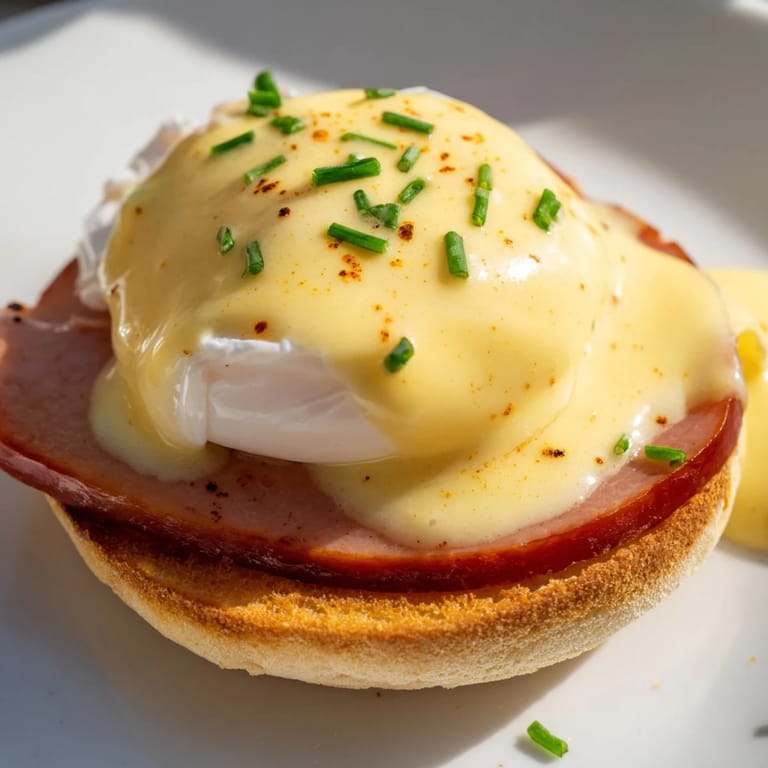
- Stack your Benedict like you're building something precious: muffin half first, then bacon, then the warm poached egg, and finally a generous pour of hollandaise. The warmth of each component helps everything meld together into something greater than the sum of its parts.
 Save to Pinterest
 I made this for someone I was trying to impress years ago, and they actually closed their eyes while eating it. It's funny how a dish can become tied to a memory like that, how the taste of it now always brings that moment back.
The Hollandaise Secret
The thing nobody tells you about hollandaise is that it's not actually difficult—it's just that one thing needs to happen at exactly the right pace. Your patience while adding the butter is the entire game. I learned this after my third broken sauce, when I finally stopped rushing and just let the emulsion happen at its own speed. Now I treat it like meditation: warm bowl, steady whisking, deliberate drizzling. The sauce that seems intimidating becomes the easiest part of the whole plate.
Timing Is Everything
The hardest part of Eggs Benedict isn't any single technique—it's doing everything at the same moment. I used to finish the hollandaise and then start the eggs, which meant eating a lukewarm plate. Now I arrange my mise en place, get water simmering, have the muffins and bacon standing by, and actually poach the eggs last, assembling the second they come out of the water. It's a small puzzle that makes everything better.
Variations Worth Trying
Once you own the basic formula, the doors open. Smoked salmon instead of bacon turns it into Royale, sautéed spinach makes it Florentine, and I've even had versions with avocado, crab, and roasted tomatoes. Each one is its own little story, and each one proves that this isn't really one recipe—it's a framework for making something special from whatever you have on hand.
- Try it with fresh asparagus or roasted cherry tomatoes for a lighter spring variation.
- Smoked salmon with dill instantly feels fancy without any extra work required.
- Even leftover roasted vegetables can become a Benedict if you believe in it hard enough.
 Save to Pinterest
 There's a reason Eggs Benedict has been on menus for over a hundred years—it's one of those rare dishes where technique and indulgence meet in perfect balance. Once you've made it once, you'll understand why people keep coming back for more.
Questions & Answers
- → How do I poach eggs perfectly for this dish?
Use gently simmering water with a splash of white vinegar to help the egg whites coagulate. Create a gentle vortex and slide in eggs one at a time, cooking for 3–4 minutes until whites are set but yolks remain runny.
- → What can I use instead of Canadian bacon?
Smoked salmon or sautéed spinach make excellent alternatives for pescatarian or vegetarian preferences without losing flavor.
- → How do I prevent hollandaise sauce from curdling?
Keep the sauce warm but not too hot, whisking constantly while gently heating over a double boiler to maintain a smooth texture.
- → Can I prepare any parts in advance?
You can toast the English muffins and prepare the hollandaise sauce ahead but poach the eggs and sear bacon just before serving for optimal freshness.
- → What garnishes enhance this dish?
Chopped fresh chives or parsley add a bright, fresh note and a pop of color when sprinkled on top before serving.