 Save to Pinterest
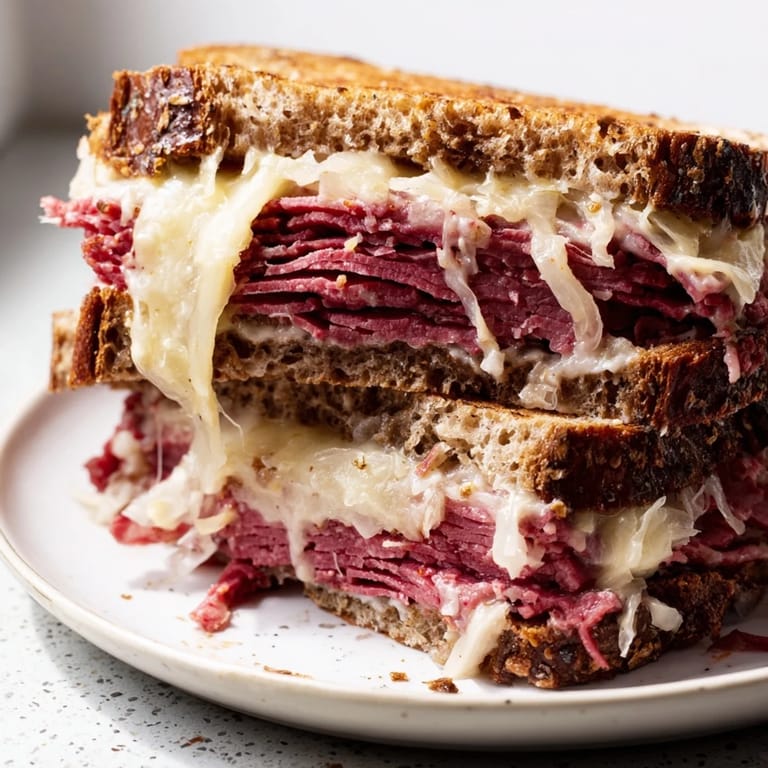
 My uncle Mike swore by his Reuben, made in the same cast-iron skillet every Saturday afternoon while the kitchen filled with butter and sauerkraut steam. I watched him work one winter, noticing how he pressed the sandwich gently—never aggressively—as if coaxing the cheese to melt rather than forcing it. That small detail stuck with me, and years later, when I finally made one myself, I understood exactly what he meant.
I made this for my partner on a snowy Wednesday when neither of us wanted to venture out, and somehow that grilled sandwich became the highlight of our whole week. We sat at the kitchen counter listening to the skillet hiss, and I realized the joy wasn't in the exotic technique—it was in the familiar comfort of warm bread, melted cheese, and someone to share it with.
Ingredients
- Rye bread: Use a sturdy, slightly denser rye; thin, soft bread falls apart under the spatula and the weight of the filling.
- Swiss cheese: The holes matter—they let steam escape and help the cheese melt evenly without becoming rubbery.
- Corned beef: Ask your deli counter for a fresh slice, not pre-packaged; the flavor and texture difference is noticeable.
- Sauerkraut: Drain it thoroughly, then blot with paper towels—excess moisture makes the bread soggy and ruins the structural integrity.
- Russian dressing: Tangy, slightly spiced, with a touch of sweetness; it anchors everything together.
- Unsalted butter: Softened, not melted, so you can spread it evenly without it pooling or soaking into the bread unevenly.
Tired of Takeout? 🥡
Get 10 meals you can make faster than delivery arrives. Seriously.
One email. No spam. Unsubscribe anytime.
Instructions
- Prepare your canvas:
- Lay out all four rye slices on a clean work surface. Spread exactly 1 tablespoon of Russian dressing on one side of each slice—this is your foundation, so don't skimp, but don't oversaturate either.
- Build the layers:
- On two slices, place a Swiss cheese slice first, followed by half your corned beef, then half your sauerkraut, then the second cheese slice. This order matters: cheese acts as a barrier so the bread doesn't absorb too much moisture from the kraut.
- Seal the sandwich:
- Place the remaining bread slices dressing-side down on top. Press gently but firmly to encourage the layers to stick together.
- Butter the exterior:
- Spread softened butter evenly across both the top and bottom of each sandwich—be generous but even, as this is what creates that gorgeous golden crust.
- Grill with intention:
- Heat your skillet or griddle over medium heat for a minute until it's warm but not smoking. Place the sandwiches down and let them sit undisturbed for 3-4 minutes, then apply gentle, consistent pressure with your spatula. You're not trying to flatten; you're encouraging contact for even browning and cheese melt. Flip and repeat on the other side.
- Rest and serve:
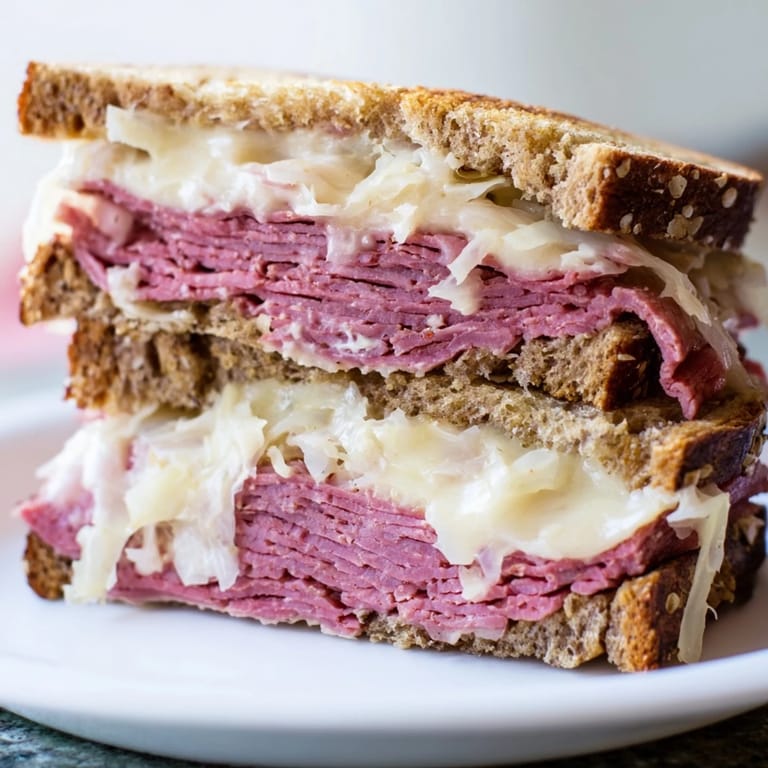
- A 1-minute rest lets the cheese set slightly so it doesn't ooze everywhere when you bite in. Slice diagonally—it's tradition, and somehow it tastes better that way.
 Save to Pinterest
 There's something almost ceremonial about slicing a Reuben in half diagonally and seeing the cheese still slightly stretching at the cut. It reminds me why food made with attention, even simple food, becomes a moment worth remembering.
Why This Sandwich Endures
The Reuben has survived decades because it understands balance—acid from sauerkraut and dressing, fat from cheese and butter, salt from corned beef, and a sturdy bread that doesn't apologize for holding everything together. Nothing is fighting for attention; everything supports everything else. It's the kind of dish that doesn't need innovation; it needs respect.
Making It Your Own
Once you've made this classic a few times, you'll notice small preferences emerging. Some people swap Russian for Thousand Island, which is sweeter and works beautifully if you like less tang. Others toast the sauerkraut separately in a dry pan first, concentrating its flavor. A few whispers suggest adding a thin slice of tomato, though the traditionalists will shake their heads—and honestly, they might be right.
The Ritual of Grilling
There's a sound that happens when a properly buttered sandwich hits a hot skillet—a specific sizzle that tells you the temperature is right. Learning to listen for that, to trust your ears and eyes and the smell of butter turning golden, is where home cooking becomes less about following orders and more about intuition.
- Let the skillet preheat just long enough that the butter melts on contact, not instantly.
- If your sandwich browns too fast, lower the heat slightly; if it's taking forever, the pan wasn't ready.
- Diagonal cuts aren't just prettier—they make the sandwich easier to hold and more satisfying to bite.
 Save to Pinterest
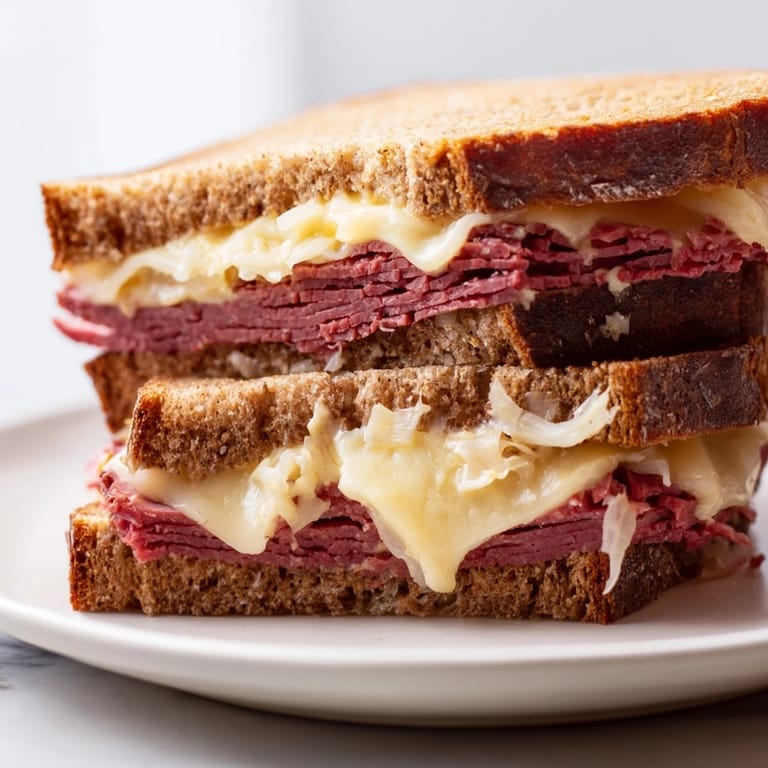
 A great Reuben is proof that you don't need complicated techniques or hard-to-find ingredients to eat well. You just need a quiet kitchen, the right proportions, and patience you can measure in minutes.
Questions & Answers
- → What type of bread is best for this sandwich?
Hearty rye bread provides the perfect texture and flavor, complementing the strong ingredients.
- → Can Thousand Island dressing be used instead?
Yes, Thousand Island dressing works well as a flavorful substitute for Russian dressing.
- → How do I achieve the melted cheese effect?
Grill the sandwich over medium heat with butter, pressing gently for 3-4 minutes per side until the cheese melts and bread crisps.
- → Is it possible to add crunch to the sauerkraut?
Yes, lightly toasting sauerkraut in a pan before assembling adds extra crunch and depth.
- → What sides complement this sandwich?
Dill pickles and potato chips are classic companions, enhancing the deli-style experience.