 Save to Pinterest
 The morning was already sweltering at 9 AM when I cracked open my bedroom window, letting in that thick tropical air that smells like rain and humidity. My roommate Sarah had stumbled home from the farmers market with an armful of guavas and mangoes, grinning about how she'd bargained down the vendor. We ended up standing in the kitchen in our pajamas, sticky fruit juice running down our wrists, eating mango slices right over the sink. That impromptu feast became the inspiration for this smoothie bowl—captured that exact feeling of tropical summer in a bowl.
Last summer, my cousin came to visit and I made these for breakfast on her first morning. She sat at my counter, spoon in hand, and said this was the closest thing to being back in Costa Rica she'd experienced since moving to the Midwest. We ended up making them every single morning of her stay, experimenting with different toppings and taking way too many pictures for Instagram. Now whenever I make this bowl, I think of her laughter at 7 AM and how food can transport you somewhere else entirely.
Ingredients
- Ripe mango: The sweetness here is the backbone of your whole bowl—look for mangoes that give slightly when you press them, like a ripe avocado would
- Fresh guava: If you've never worked with fresh guava, the smell alone will stop you in your tracks—intense and floral and unmistakably tropical
- Frozen banana: I keep a bag of sliced bananas in my freezer specifically for smoothie bowls because they create that thick, ice cream-like consistency without needing dairy
- Greek yogurt: This adds protein and tang that balances all that fruit sweetness, though coconut yogurt works beautifully if you want to keep it plant-based
- Coconut water: Skip regular water here—coconut water adds another layer of tropical flavor and natural electrolytes
- Honey or agave: Totally optional depending on how sweet your fruit is, but I find a tablespoon ties everything together
- Granola: The contrast between smooth cold base and crunchy warm toppings is what makes smoothie bowls actually satisfying
- Coconut flakes: Toast them for thirty seconds in a dry pan and thank me later—the difference in flavor is enormous
- Fresh berries: I'm partial to blueberries for how they look against that orange-yellow base, but strawberries add nice tartness
- Chia seeds: These are optional but they add this subtle crunch and keep you full way longer than you'd expect
Tired of Takeout? 🥡
Get 10 meals you can make faster than delivery arrives. Seriously.
One email. No spam. Unsubscribe anytime.
Instructions
- Blend your base until silky:
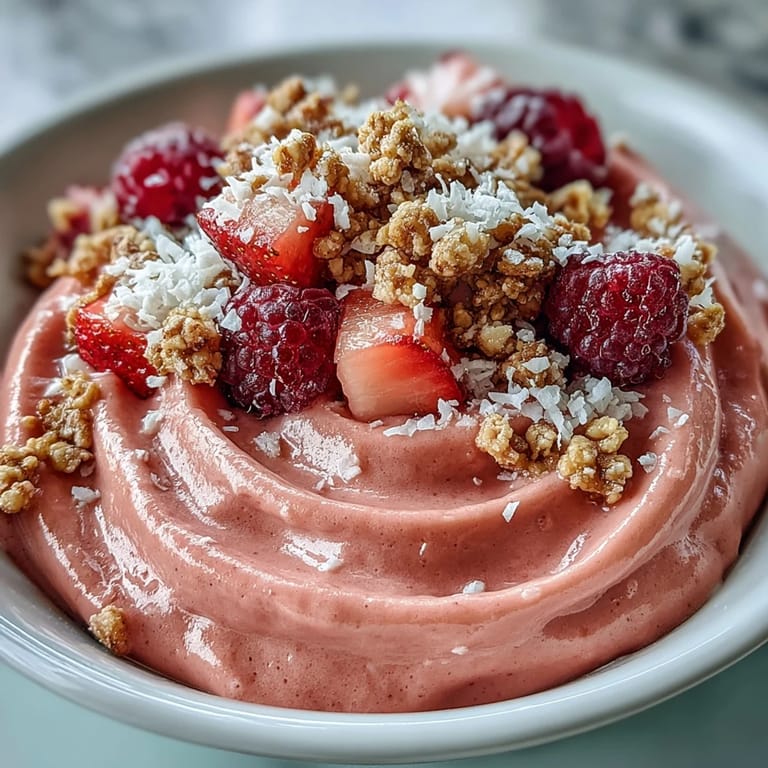
- Toss your mango, guava, frozen banana, yogurt, coconut water, and honey into the blender and let it run for a good minute—you want zero chunks, just this impossibly smooth, bright orange mixture that's thick enough to hold a spoon upright.
- Pour and smooth the surface:
- Divide between two bowls and use the back of your spoon to create those perfect café-worthy swirls on top—this matters more than it should because the toppings cling to those little ridges you create.
- Artfully arrange your toppings:
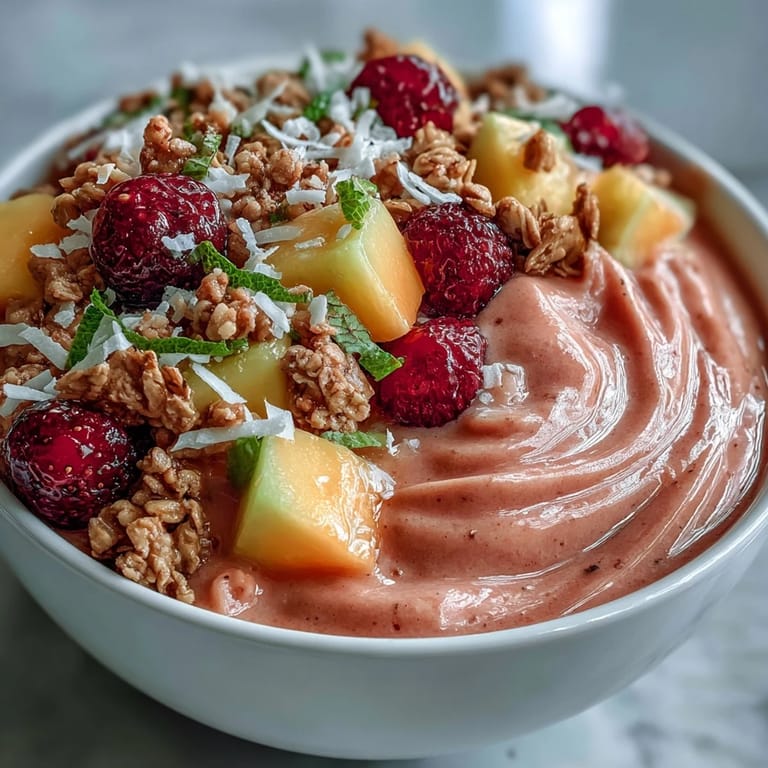
- I like to work in sections—a stripe of granola, a cluster of berries, a dusting of coconut—rather than mixing everything together, because each bite should have different textures and flavors.
- Add the finishing touches:
- Sprinkle chia seeds if you're using them, tuck in a few fresh mint leaves for that pop of green, and serve immediately before the base starts to melt and lose its structure.
 Save to Pinterest
 My sister claimed she hated smoothie bowls until I made this for her last month. She took one bite, went silent for a full minute, then asked if I could teach her how to get the proportions right. Now she sends me photos of her breakfast experiments every weekend, each one a little different but always inspired by that first bowl she tried. It's funny how one recipe can open up a whole new way of eating for someone.
Making It Your Own
The beauty of this recipe is how forgiving it is—swap pineapple for guava if that's what you can find, or use almond butter instead of yogurt if you want it nuttier and richer. I've made versions with added protein powder for post-gym breakfasts, and ones with spinach snuck in for extra nutrients that still somehow tasted like dessert. The tropical base is strong enough that you can customize quite a bit without losing what makes it special.
Toppings Game Strong
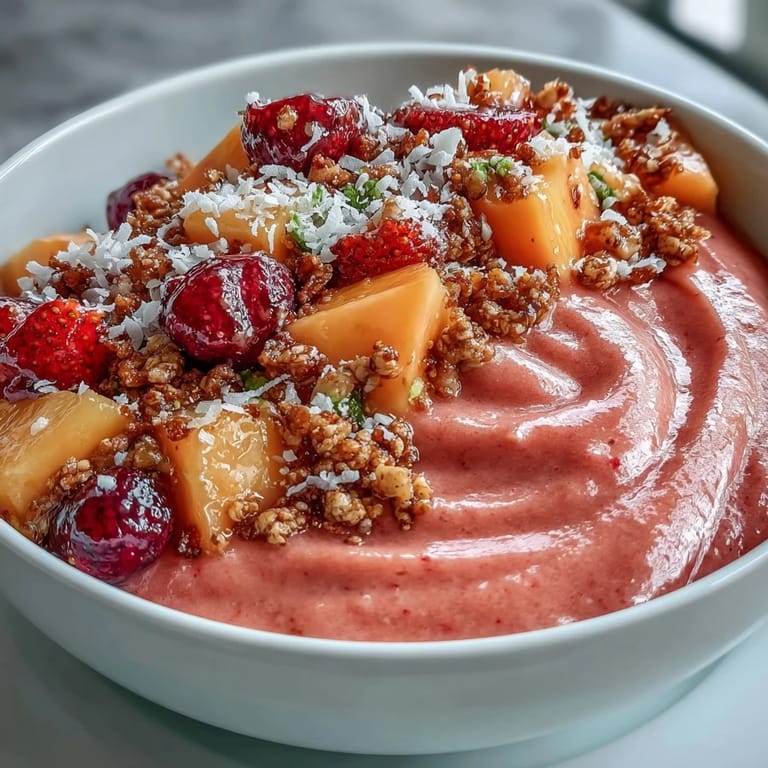
The difference between an okay smoothie bowl and an amazing one comes down to toppings variety and temperature contrast. I keep toasted nuts, seeds, and chopped fruit in separate containers in my fridge so I can assemble bowls quickly on weekday mornings. Sometimes I'll add a dollop of almond butter on top—when it hits the cold smoothie base, it firms up slightly and creates these incredible creamy pockets throughout the bowl.
Timing And Temperature
These bowls are best eaten immediately after assembly because that base starts melting pretty quickly. I learned this the hard way after trying to meal prep them for the week—do not do that, they turn into sad puddles. What does work is prepping all your components: chop and freeze the fruit slices, toast your coconut and nuts, portion dry toppings into small containers. Then in the morning, you just blend and assemble.
- If your fruit isn't quite sweet enough, a splash of orange juice instead of coconut water can help bridge the gap
- Room temperature toppings taste better against the cold base than refrigerated ones do
- Thick smoothie bowls require more blender power than thin ones—let your machine work for it
 Save to Pinterest
 There's something deeply satisfying about eating something this vibrant and nourishing first thing in the morning. Hope this recipe brings a little tropical sunshine to your kitchen, no matter what season it is outside.
Questions & Answers
- → Can I make this bowl ahead of time?
The smoothie base is best enjoyed immediately while thick and creamy. You can blend the base a few hours ahead and store it in the refrigerator, though it may thin slightly. Add toppings just before serving to maintain their crunch and texture.
- → What can I substitute for guava?
If fresh guava isn't available, you can use extra mango, pineapple, or even papaya. Frozen guava puree also works well and may provide a more intense flavor. Adjust sweetness accordingly since some substitutes may be less tangy than guava.
- → How do I make the smoothie base thicker?
Use frozen fruit instead of fresh, especially the banana and mango. You can also reduce the liquid amount or add ice while blending. For an extra thick consistency, try adding frozen cauliflower or avocado—they add creaminess without altering the tropical flavor.
- → Is this bowl suitable for meal prep?
You can pre-portion the smoothie base ingredients into freezer bags for quick blending. Store dry toppings like granola, coconut flakes, and chia seeds separately in airtight containers. Fresh berries should be added just before serving to prevent sogginess.
- → Can I use fresh fruit instead of frozen banana?
Fresh banana will work but the texture will be thinner. To compensate, add a few ice cubes or reduce the liquid by 1-2 tablespoons. You can also freeze your fresh banana slices for 2-3 hours before blending for better thickness.
- → What other toppings work well with this base?
Sliced almonds, hemp seeds, cacao nibs, or fresh tropical fruit like kiwi and pineapple make excellent additions. A drizzle of almond butter or tahini adds healthy fats and richness. Edible flowers also create a beautiful presentation.