 Save to Pinterest
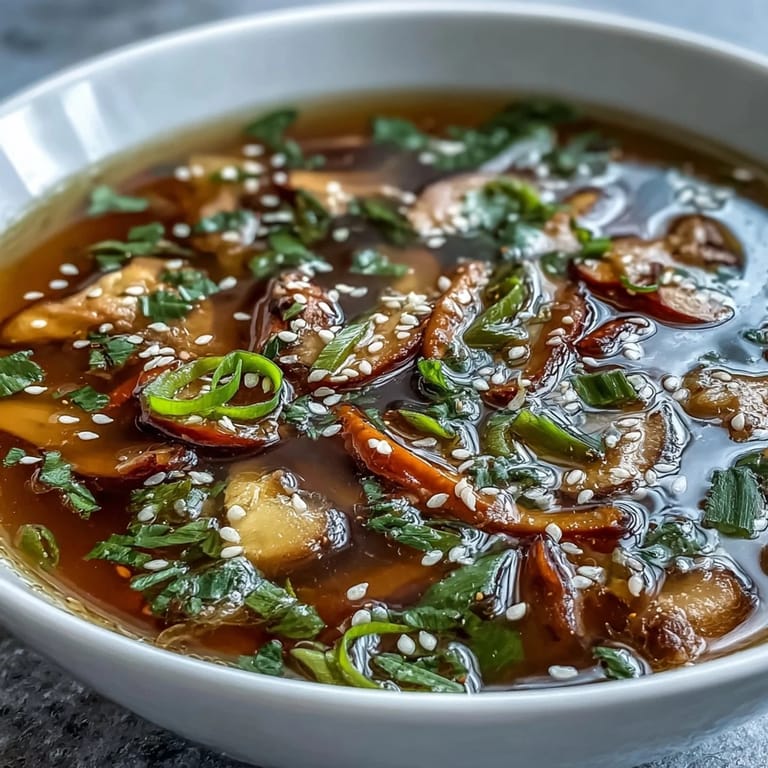
 There's a particular kind of cold that makes you crave something that warms you from the inside out, and that's exactly when this ginger-miso soup found its way into my kitchen rotation. My neighbor mentioned she'd been sipping bowls of it during a rough week, and one taste confirmed why—the broth hits that sweet spot between light and deeply nourishing, with ginger that tingles just enough to feel restorative. I've made it dozens of times since, tweaking it slightly depending on what's in my crisper drawer, but the core magic stays the same.
I made this for my partner when he came home with a scratchy throat one January evening, and I watched his whole expression shift with that first spoonful. He set the bowl down and just breathed in the steam for a moment, and I realized this soup had become my quiet way of saying I'm looking out for you. Since then, it's what I reach for when someone needs gentle nourishment more than anything fancy.
Ingredients
- Water or vegetable broth (6 cups): The foundation deserves good quality—it's half the flavor here, so use broth if you have it on hand rather than plain water.
- Fresh ginger (2-inch piece, thinly sliced): Don't peel it; the skin holds beneficial oils and the whole slices infuse more slowly and gently than minced ginger would.
- Garlic cloves (2, thinly sliced): Slicing instead of mincing prevents the soup from tasting harsh, letting the garlic whisper rather than shout.
- White or yellow miso paste (2 tablespoons): This is where the umami magic lives—it's the probiotic backbone, so keep it away from boiling heat to preserve those living cultures.
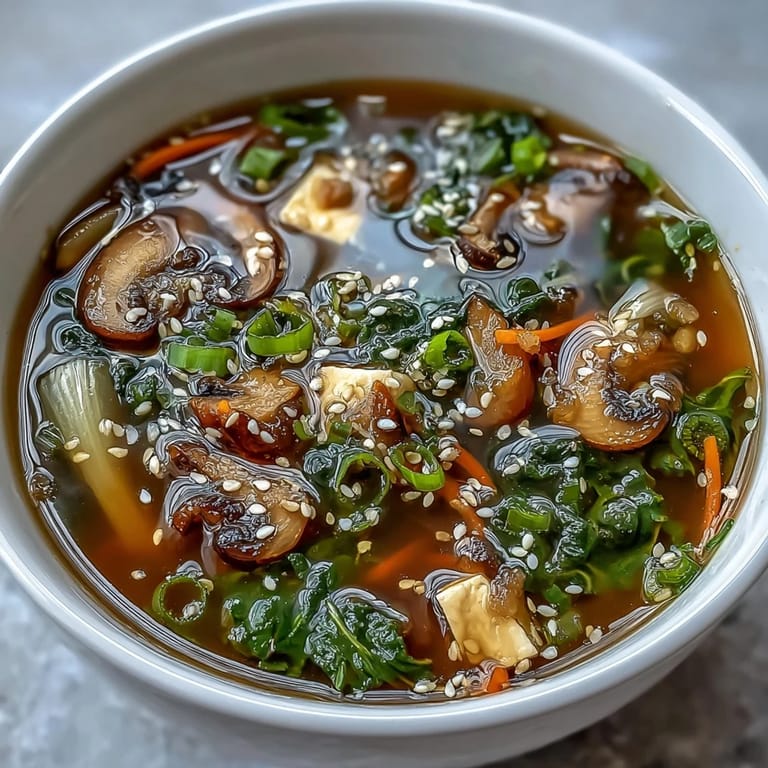
- Napa cabbage (1 cup, thinly sliced): It softens quickly and adds a subtle sweetness that balances the salty-savory broth beautifully.
- Carrot (1 medium, julienned): Thin slices mean it cooks in minutes while holding a gentle crunch if you time it right.
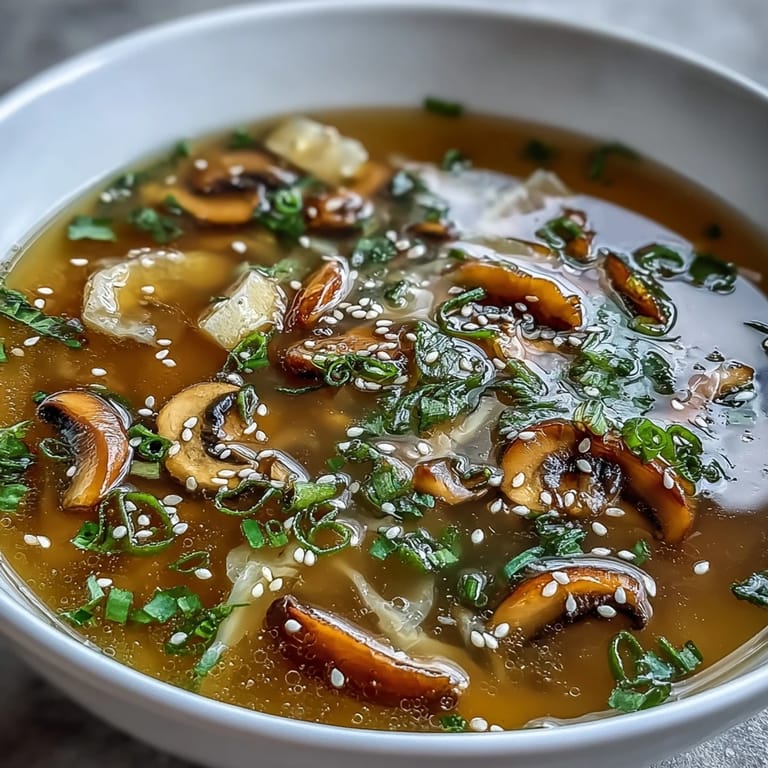
- Shiitake mushrooms (1 cup, stemmed and sliced): Their earthiness grounds the broth; save stems for future stock-making.
- Scallions (2, sliced): The brightness of fresh scallions at the end lifts everything and prevents the soup from feeling heavy.
- Toasted sesame seeds (1 tablespoon): Toast them yourself in a dry pan for maximum flavor—30 seconds, maybe 45, and they go from pale to fragrant.
- Fresh cilantro or parsley (1 tablespoon, optional): I prefer cilantro for its peppery edge, but parsley works if that's what you have.
- Chili oil or chili flakes (1 teaspoon, optional): A small amount adds complexity without overwhelming the delicate warmth of the ginger.
- Silken tofu (200 g, optional): Adds creaminess and protein; handle gently since it breaks apart easily.
- Soba or rice noodles (100 g, optional): Cook them separately to avoid turning your broth starchy, then add at the very end.
Tired of Takeout? 🥡
Get 10 meals you can make faster than delivery arrives. Seriously.
One email. No spam. Unsubscribe anytime.
Instructions
- Start the fragrant base:
- Bring your broth to a gentle simmer in a large pot—you want small, lazy bubbles, not a rolling boil. Add the ginger slices and garlic, then step back and let them do their work for 10 minutes while your kitchen fills with that clean, spicy aroma.
- Coax the vegetables tender:
- Slide in the cabbage, carrot, and mushrooms, adjusting your heat so they stay at a gentle simmer for 5 to 7 minutes. You're looking for tender but not limp—test with a fork and stop cooking as soon as they give way easily.
- Temper the miso:
- Remove the pot from heat and grab a small bowl. Spoon a ladle of hot broth into the bowl with your miso paste, then whisk it until completely smooth before stirring it back into the pot—this prevents lumps and keeps the probiotics alive.
- Warm through any extras:
- If you're adding tofu or cooked noodles, now's the time, just for about 2 minutes so they heat through without further cooking everything else to oblivion.
- Finish and serve:
- Ladle soup into bowls and crown each one with scallions, sesame seeds, herbs, and a drizzle of chili oil if you like heat. Serve right away while everything's still steaming.
 Save to Pinterest
 One evening I made a double batch and had a friend over who'd been going through a tough time, and we sat at the kitchen counter with our bowls just talking and sipping. Something about the ritual of it—the warmth in your hands, the steam on your face, the way the flavors keep unfolding with each spoonful—made everything feel a little more manageable for both of us. That's when I understood this soup was about more than nutrition.
The Art of Building Broth Flavor
The ginger and garlic infusion is really the soul of this soup, and I learned this the hard way by once trying to rush it. When you skip that initial 10-minute infuse and just throw everything in at once, you end up with a muddy flavor where nothing really sings. The slow infusion lets the ginger's warmth and the garlic's sweetness seep gently into the broth without any bitterness creeping in. Now I treat those first 10 minutes like a meditation—there's nothing to do but wait and breathe in the kitchen.
Adapting This Soup to What You Have
The beauty of this recipe is that it's forgiving and works with substitutions. I've swapped shiitake for button mushrooms on nights when the farmers market was picked over, used baby bok choy instead of napa cabbage, even thrown in wilted spinach at the very end if I had a handful that needed using. The structure—ginger broth plus vegetables plus miso finish—stays constant, so you can play freely with what fills those categories.
Serving and Storing Wisdom
This soup tastes best served immediately while the broth is still hot and the vegetables have that tender-but-not-soft texture. That said, it keeps beautifully in the refrigerator for three or four days if you store the broth and vegetables together; just reheat gently on the stove and add fresh scallions and sesame seeds right before serving. The miso has already done its work, so there's no worry about it breaking down or losing flavor.
- Keep noodles and tofu separate if you're planning leftovers, adding them only to the portion you're eating.
- If you're batch-cooking this, consider holding back the garnishes and adding them fresh each time you reheat, for maximum brightness and texture.
- A squeeze of fresh lime juice right before eating brightens the whole bowl if you're in the mood for extra lift.
 Save to Pinterest
 This soup has become my answer to a lot of different moments—when someone's under the weather, when I need comfort but not heaviness, or when the season demands something warming but not heavy. It's proof that simple, intentional cooking doesn't need to be complicated to feel genuinely good.
Questions & Answers
- → Can I make this ahead of time?
Yes, prepare the broth and vegetables in advance. Store separately and combine before serving, adding the miso at the end to preserve its beneficial probiotics.
- → What type of miso works best?
White or yellow miso paste provides a milder, slightly sweet flavor that complements the ginger beautifully. Red miso can be used for a stronger, more intense taste.
- → Is this suitable for meal prep?
Absolutely. Portion into containers and refrigerate for up to three days. The flavors actually deepen over time, though the vegetables will soften more.
- → Can I use other vegetables?
Bok choy, spinach, daikon radish, or kale make excellent additions or substitutions. Adjust cooking times based on vegetable density.
- → How do I prevent miso from losing its benefits?
Always remove the pot from heat before stirring in the miso. Boiling destroys the probiotics and can make the flavor bitter or overly salty.